
Recruitment guide
Experience Certificate for Govt Jobs 2026 — Explained
Understand the importance of experience certificates for government job applications in 2026, including validity, issuing authorities, and common requirements.

An experience certificate is a critical document for professionals seeking government jobs in India. It serves as official proof of your employment history, roles, and responsibilities in previous positions. With competitive exams and rigorous verification processes, understanding when and how to submit this document can significantly impact your career trajectory. This guide explains the importance of experience certificates in 2026 government job applications, scenarios where they’re mandatory, and the authorities that validate them. In the highly structured world of Sarkari Naukri, where documentation is paramount, this single piece of paper can be the key that unlocks opportunities for seniority, higher pay scales, and specialized roles.
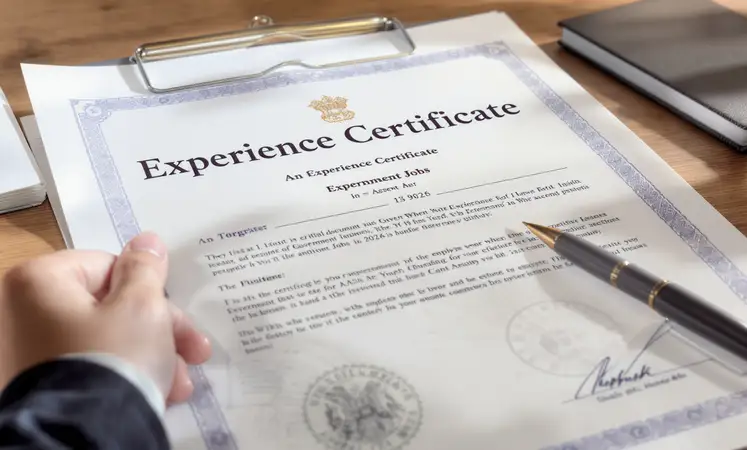
What Is an Experience Certificate?
An experience certificate is a formal document issued by an employer to verify an individual’s tenure, job profile, and performance. In government jobs, it acts as evidence of your eligibility for roles requiring prior work experience. Unlike private-sector roles, government employers often scrutinize these certificates to ensure candidates meet strict criteria for specialized positions or senior-level appointments. It is a testament to your professional journey, providing a verified snapshot of your skills and accomplishments in a format that government recruiting bodies trust implicitly.
It is crucial to distinguish an experience certificate from a relieving letter. While a relieving letter simply confirms that you have been relieved from your duties and that there are no dues outstanding, an experience certificate delves deeper. It provides a detailed account of the nature of work you performed, the skills you honed, and the value you brought to the organization. For government jobs, this distinction is critical, as a relieving letter alone is often insufficient to claim experience points or eligibility.
When Is an Experience Certificate Required in Government Jobs?
Government jobs may demand experience certificates in the following scenarios:
Applying for Senior or Specialized Roles: Positions like Section Officer, Medical Officer, or Engineering Supervisor often require proof of prior experience. For instance, a vacancy for a Chief Engineer in CPWD may mandate a minimum of 5 years of experience in a relevant field, which must be substantiated with valid certificates.
Promotions or Transfers: Internal candidates must submit experience proofs when seeking career advancement within the same department. The Departmental Promotion Committee (DPC) relies heavily on these documents to verify if an employee has completed the requisite number of years in a particular grade or post to be eligible for the next level.
Pension or Retirement Benefits: Some schemes require experience certificates to calculate service duration. When calculating the total qualifying service for pension, previous employment in other government departments or even recognized autonomous bodies can be added, but only with proper documentation.
Re-employment in Government Sectors: Retired professionals returning to service on a contract or re-employment basis may need to validate past employment to determine their new pay scale and terms of service.

For example, the /sarkari-result">Sarkari Result portal often lists vacancies where experience certificates are mandatory. It is always advisable to meticulously read the official notification for any advertisement, as the required experience duration (e.g., "experience of not less than three years") and the specific type of experience needed are always clearly specified.
Key Components of a Valid Experience Certificate
A legally acceptable certificate should include the following components. Any missing element can lead to the certificate being deemed invalid by the scrutinizing authority, potentially derailing your application.
Component | Description | Why It's Important |
|---|---|---|
Employee Name | Full name as per official records (should match your other application documents) | Prevents identity mismatch during verification. |
Employment Dates | Exact start and end dates of employment (DD/MM/YYYY format is preferred) | Crucial for calculating the exact duration of experience. |
Job Title & Responsibilities | Detailed description of roles, duties, and projects handled | Proves the relevance of your experience to the new role. |
Employer Details | Organization's full name, complete postal address, and official contact information | Allows the recruiting body to contact the previous employer for verification. |
Authorized Signatory | Signature, full name, designation, and the official seal/stamp of the issuing authority (e.g., HR Head) | The most critical element; an unstamped or improperly signed certificate is worthless. |
For roles in specialized fields, it is also beneficial if the certificate mentions any specific software, machinery, or technical skills you mastered during your tenure, as this adds further credibility to your application.
Who Accepts Experience Certificates in Government Jobs?
Key authorities that validate these documents include:
Union Public Service Commission (UPSC): For civil services and central government roles, the UPSC mandates experience certificates for posts that have it as an eligibility criterion. The verification process is exceptionally thorough.
Staff Selection Commission (SSC): Accepts certificates for non-gazetted posts like Combined Graduate Level (CGL) exams where certain posts require relevant work experience.
State Public Service Commissions: Validate experience for state-level jobs, such as those for State Civil Services or District-level officers. Each state may have its own specific format preferences.
Public Sector Undertakings (PSUs): Organizations like BHEL, ONGC, or SAIL require certificates for technical and managerial roles. They often have a dedicated recruitment cell that verifies every detail.
Banks and Financial Institutions: Public sector banks like SBI, Punjab National Bank, and regulatory bodies like RBI require validated experience for specialist officer positions.
The acceptance is not merely a formality; these bodies often have a dedicated verification wing that contacts your previous employers directly to confirm the authenticity of every detail mentioned in the certificate.
How to Obtain an Experience Certificate
Follow these steps to secure your certificate:
Submit a formal written request to your previous employer’s HR department or your immediate reporting manager. The request should be polite, clear, and state the purpose (e.g., "for applying to a government job").
Provide necessary supporting documents like your appointment letter, last three months' salary slips, and your relieving letter to help HR process your request quickly.
Follow up regularly through polite emails or phone calls to avoid delays. It is advisable to initiate this process well in advance of your application deadline.
Verify all details meticulously – dates, designation, spelled-out responsibilities – before accepting the final copy. A single typo can cause major issues later.
Get multiple copies if possible, as you may need to submit original certificates to multiple recruiting agencies simultaneously.
Note: Digital certificates are increasingly accepted post-pandemic, but physical copies on company letterhead with original wet-ink signatures and stamps remain the gold standard and are required for most roles during the final document verification round.
Dealing with Unresponsive Previous Employers
A common hurdle many face is an unresponsive former employer. In such cases, you can present a combination of alternate documents to the recruiting authority. These can include:
Appointment Letter
Relieving Letter
Salary Slips (especially the first and last ones)
Form 16 issued by the employer
Bank statements showing salary credits
Performance Appraisal letters
The recruiting authority holds the discretion to accept these documents in lieu of a standard experience certificate, but it is not guaranteed. A written communication explaining the situation is always recommended.
Common Mistakes to Avoid
Missing employer contact details or signatures: An experience certificate without a verifiable address and phone number is often rejected.
Discrepancies in employment dates: Even a minor mismatch between the dates on your resume and the certificate can be flagged as a discrepancy and lead to disqualification.
Submitting certificates without official stamps: A signature without a company seal is usually considered invalid. The stamp authenticates the signature.
Failing to translate certificates issued in regional languages: If your certificate is in Hindi, Marathi, Tamil, or any other language, you must submit a self-attested translation in English alongside the original.
Overstating responsibilities: While it's important to detail your role, claiming responsibilities you did not handle can be easily uncovered during verification and will be treated seriously.
The Role of Experience Certificates in Promotions and Transfers
For existing government employees, experience certificates are not just for new jobs; they are vital for internal career progression. They validate eligibility for promotions or inter-departmental transfers. They help HR committees and Departmental Promotion Committees (DPC) assess whether candidates meet the minimum service duration or skill requirements for advanced roles. The certificate from your current government department is treated as the most authoritative record of your work.
Always keep updated copies ready when applying through platforms like /admit-card">admit card portals for internal exams. For transfers, the experience certificate helps the new department understand your expertise and place you in a suitable position, ensuring a smooth transition and continuity of work.
Checks to complete before you apply
Experience certificates are indispensable for building a credible and verifiable profile in government sectors. Whether you’re a fresh applicant or a seasoned professional, understanding their significance in the 2026 job cycles ensures you stay prepared for the rigorous verification processes that define Sarkari Naukri. Always cross-check specific requirements mentioned in official notifications, maintain organized and multiple copies of your career documents, and initiate the process of obtaining them well in advance. This proactive approach is the cornerstone of seamless and successful career growth in the public sector.
Frequently Asked Questions
Q1: How long is an experience certificate valid?
Experience certificates do not have a formal expiration date, but government bodies typically prefer documents issued within the last 2–3 years for recent roles to ensure the information is current. For older employments, the certificate remains valid as a record of that period.
Q2: Can I submit a digital experience certificate?
Many departments now accept digitally signed certificates (signed with a DSC) from recognized authorities, especially for the initial application stage. However, you must verify this with the specific recruiting authority's guidelines. Physical copies on letterhead are almost always required during the final document verification rounds.
Q3: What if my previous employer refuses to issue the certificate?
First, try to resolve the issue through formal written communication. If they still refuse, you can approach the labor authorities for assistance. For your application, you can submit a combination of alternate proofs like salary slips, appointment letters, and bank statements. In extreme cases, you may need to consult legal advice to obtain what is rightfully yours.
Q4: Are self-employed professionals eligible for government jobs requiring experience?
Typically, most government roles mandate experience from a recognized organization (government or private registered entity). Freelance or self-employed work is generally not considered valid experience unless it is supported by verifiable client contracts, project reports, and income tax returns that clearly show the professional nature of the work. The recruiting authority's decision on this is final.
Q5: Can I correct an experience certificate after submission?
No. Once submitted to a government agency, you cannot typically make changes or substitutions. Any corrections must be made before submission. If you discover an error, you must contact your former employer immediately to reissue an amended and correctly stamped copy. Submitting a corrected copy later is usually not permitted and may cast doubt on the authenticity of your documents.
Q6: Does internship experience count towards the required experience?
This depends entirely on the wording in the official job notification. Some notifications explicitly state "work experience" and may exclude internships. Others may specify "including internship experience" if it was a full-time, paid engagement. If the notification is unclear, it is best to write to the recruiting authority for clarification before applying.
Related Resources
Related Government Job Resources
Continue with active job hubs and related government job pages on TrueJobs.
Tools for this recruitment topic
Use only the tools relevant to the dates, eligibility or documents discussed above.
TrueJobs Editorial Team
TrueJobs editorial desk
This article is prepared from the sources referenced in the guide and reviewed for clarity, links and dated information. Read our editorial and corrections policy.
Continue This Topic
Follow the closest earlier and newer coverage so older archive posts keep real contextual crawl paths.
Top 10 Eligibility Mistakes in Sarkari Job Applications 2026: Avoid Rejection
Avoid common eligibility mistakes in Sarkari job forms 2026. Learn key errors leading to rejection and ensure your application meets all criteria.
Documents Required for Sarkari Job Application 2026: Complete Candidate Checklist
Avoid rejection! Get the complete 2026 checklist for Sarkari job documents – education proofs, caste certificates, photo specs, and submission guidelines.
Read Next

Latest Sarkari Jobs 2026: Central & State Government Vacancies Update

AIIMS Non-Teaching Recruitment 2026: Complete Guide & Expected Details

New Sarkari Jobs Released Today 2026: Latest Government Job Notifications

Documents Required for Sarkari Job Application 2026: Complete Candidate Checklist
Explore Topics
Perfect Your Resume
Use our AI-powered Resume Builder to create ATS-optimized resumes.
AI Resume Builder