
Career guide
Best Career Options After Graduation in India 2026 — Explained
Explore the best career options after graduation for Science, Commerce, and Arts students. From IT to management consulting, discover high-growth paths in India.
TrueJobs.co.in
Category: Career Advice

Tags: career options, after graduation, science careers, commerce careers, arts careers, job options, career guidance
Best Career Options After Graduation in India
The Post-Graduation Crossroads: Job vs. Higher Studies
Graduation marks a significant milestone in every student's academic journey, a culmination of years of hard work and learning. Yet, for many Indian graduates, this achievement quickly leads to the crucial question: "What now?" This pivotal post-graduation crossroads demands careful introspection, strategic planning, and a deep understanding of one's aspirations and the evolving professional landscape. Identifying the best career options requires a blend of rigorous self-assessment, understanding one's inherent strengths, interests, and passions, and a keen awareness of the modern Indian job market's demands, emerging trends, and abundant opportunities.
It's a period for deep reflection on personal aptitude, long-term career goals, and the practical realities of the professional world, ensuring that the chosen path aligns with both personal fulfillment and professional growth.
The primary decision for most graduates, regardless of their academic stream—be it Science, Commerce, or Arts—is whether to enter the workforce immediately or pursue higher education. Both paths offer distinct advantages and challenges, with the optimal choice depending heavily on individual goals, current financial situation, family expectations, and long-term career aspirations. Understanding the implications of each choice, including the potential returns on investment (ROI) for further education and the immediate benefits of gaining work experience, is crucial for making an informed decision that aligns seamlessly with one's personal and professional trajectory.

Entering the Job Market
Choosing immediate employment is often the preferred route for those seeking financial independence, practical application of their academic knowledge, and invaluable real-world experience. Direct entry into the workforce provides an unparalleled opportunity for practical learning, allowing graduates to develop essential soft skills, build robust professional networks, and gain firsthand insights into corporate dynamics. It allows graduates to bridge the gap between academic theory and industry practice, gaining a competitive edge early in their careers by demonstrating initiative and adaptability.
- Benefits:
- Financial Independence: Starting a job immediately allows graduates to begin earning and managing personal finances sooner. This reduces reliance on family support, enables savings for future goals like further education or investments, and fosters a sense of responsibility and autonomy.
- Practical Experience: This is perhaps the most significant benefit. Graduates can apply academic knowledge directly to real-world problems, acquire industry-specific skills that are highly valued by employers, and understand corporate culture firsthand. This accelerates professional growth and provides a foundation for future career advancement.
- Skill Development: Beyond technical skills, immediate employment helps cultivate crucial soft skills. These include effective communication, collaborative teamwork, critical problem-solving, efficient time management, adaptability to changing environments, and leadership potential, all of which are essential for success in any professional setting.
- Networking: Entering the workforce provides ample opportunities to build professional connections. These networks are vital for future career progression, finding mentors, collaborating on projects, and discovering new opportunities within and across industries. Strong professional relationships can open doors that might otherwise remain closed.
- Early Career Progression: Starting a career sooner means graduates can begin climbing the career ladder earlier. This can potentially lead to faster promotions, increased responsibilities, higher compensation, and a quicker path to leadership roles, giving them a head start over peers who opt for further studies.
- Actionable Advice:
- Skill Up: Identify in-demand skills relevant to your desired industry and acquire them through online certifications (e.g., Coursera, Udemy, edX, NPTEL, LinkedIn Learning) or vocational training programs. For B.Com graduates, advanced Excel, Tally ERP 9, financial modeling, or GST certification courses are highly beneficial. Science graduates might consider learning basic data analysis, digital marketing fundamentals, or a foreign language, depending on their target industry and role.
- Resume & Cover Letter: Craft a compelling, tailored resume that highlights relevant academic projects, internships, volunteer work, and achievements. Quantify your accomplishments whenever possible. Always write a personalized cover letter for each application that addresses the specific requirements of the job description and demonstrates your genuine interest in the role and the company.
- Utilize Job Portals: Actively use reputable job platforms like TrueJobs.co.in, Naukri, LinkedIn, Indeed, Monster, and Glassdoor. Set up specific job alerts for roles that match your qualifications and career interests. Regularly update your profile with new skills and experiences to ensure maximum visibility to recruiters.
- Networking: Attend career fairs, industry-specific events, workshops, and alumni meetups organized by your college or professional bodies. Leverage LinkedIn to connect with professionals in your desired field, participate in online forums, and consider conducting informational interviews to gain insights and advice from experienced individuals.
- Internships: Even after graduation, consider pursuing a short-term internship. Many companies offer paid internships that provide valuable hands-on experience and opportunities to make connections. Internships provide a low-risk way to explore different roles, industries, and company cultures before committing to a full-time position.
Pursuing Higher Studies
For certain fields, a postgraduate degree is not just beneficial but often essential for significant career advancement, entry into specialized roles, or a career shift. Examples include research scientists, specialized legal practitioners, clinical psychologists, or university professors. An MBA, M.Tech, or a specialized Master's (like M.Sc. in Data Science, M.A. in Public Policy) can lead to higher starting salaries, more specialized and senior roles, and greater leadership opportunities, representing a strategic investment in future earning potential and career trajectory. It offers a chance for deeper academic exploration and a more focused career path.
- Benefits:
- Specialization: A postgraduate degree allows individuals to gain deeper knowledge and expertise in a specific domain or sub-field. This enhanced specialization significantly increases market value and opens doors to highly specialized, niche, and often higher-paying roles that require advanced skills.
- Enhanced Earning Potential: Statistically, postgraduate degrees often correlate with higher starting salaries, faster career growth, and access to more senior positions with significantly better compensation packages and benefits. The long-term financial returns can often outweigh the initial investment in education.
- Career Shift: A postgraduate degree, particularly an MBA, can serve as a powerful catalyst for a career shift. Graduates from any stream can leverage an MBA to transition into management roles across various industries, providing a structured pathway to a new professional direction and broader opportunities.
- Research & Academia: For those passionate about contributing to knowledge creation, teaching, and intellectual exploration, a Master's or Ph.D. is essential. These degrees are prerequisites for careers in research, university teaching, and academic leadership, allowing individuals to educate future generations and push the boundaries of their field.
- Global Opportunities: Many international postgraduate programs are globally recognized and open doors to diverse global career prospects. They offer exposure to different cultures, international best practices, and an expanded professional network that spans continents, enhancing global mobility and competitiveness.
- Actionable Advice:
- Research Programs: Thoroughly investigate postgraduate programs, considering not just the university's reputation but also the curriculum, faculty expertise, research opportunities, industry collaborations, and placement record. Look into alumni success stories and the specific career paths taken by graduates of the program.
- Entrance Exams: Prepare diligently for relevant entrance exams. For management, this includes CAT, XAT, GMAT, NMAT, SNAP. For engineering and science, GATE, GRE. For law, CLAT (for LLM), AILET. Start preparation well in advance, consider coaching classes, online resources, and mock tests to familiarize yourself with the exam pattern and improve performance.
- Financial Planning: Postgraduate education can be a significant financial undertaking. Factor in tuition fees, living expenses, and the potential loss of income during your studies. Explore various funding options such as scholarships (merit-based, need-based, government-sponsored), education loans from public and private banks, assistantships, and part-time work opportunities (where permissible).
- Networking (Academic): Connect with professors, current students, and alumni of your target programs. Attend webinars, open days, and university fairs to gain insights into the program, campus culture, and potential career paths. Engage with the academic community to build relationships that can be beneficial during and after your studies.
- Statement of Purpose (SOP) & Letters of Recommendation (LOR): For many postgraduate programs, a strong SOP articulating your motivations, goals, and suitability for the program is crucial. Secure compelling LORs from professors or supervisors who know your academic and professional capabilities well.
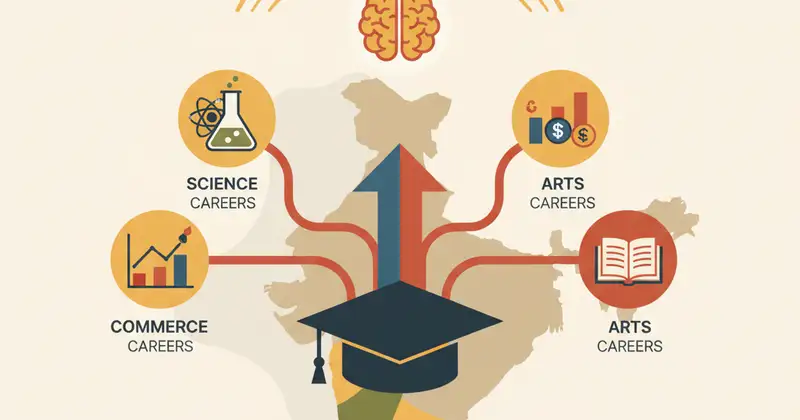
Best Career Options for Science Graduates (B.Sc./B.Tech)
Science graduates, especially from engineering and technology disciplines, are highly valued for their analytical reasoning, critical problem-solving capabilities, and strong technical proficiency. India's burgeoning tech sector, aggressive manufacturing push (e.g., "Make in India"), and increasing emphasis on research and development offer diverse and rewarding avenues. Their foundational understanding of scientific principles, coupled with a systematic approach to challenges, makes them highly adaptable to various innovative fields and rapidly evolving industries.
1. Information Technology (IT) and Software Development
India's IT sector remains a global powerhouse and a major employer, constantly driving innovation and digital transformation. The demand for skilled tech talent is perpetual and evolving, driven by rapid technological advancements in areas like artificial intelligence, machine learning, cloud computing, blockchain, and the Internet of Things (IoT). This sector offers dynamic career paths for those with a strong aptitude for logic and coding.
- Typical Roles: Software Developer/Engineer, Web Developer (Front-end, Back-end, Full-stack), Mobile App Developer (Android/iOS), Quality Assurance Engineer (QA), DevOps Engineer, Cloud Engineer (AWS, Azure, GCP), Cybersecurity Analyst, Database Administrator, Network Engineer, UI/UX Developer.
- Why it's good: High demand across various industries (e-commerce, finance, healthcare, entertainment), competitive salaries and benefits, continuous learning opportunities due to rapid technological innovation, and global exposure through multinational companies and remote work options. The industry's dynamic nature ensures job security and growth for skilled professionals who consistently update their knowledge and adapt to new tools and technologies.
- Practical Advice: Master one or two in-demand programming languages such as Python, Java, JavaScript (with frameworks like React, Angular, Vue.js), C++, or Go. Build a strong portfolio of personal projects on platforms like GitHub, demonstrating your coding skills, problem-solving abilities, and understanding of software development lifecycle. Participate actively in coding competitions (e.g., HackerRank, LeetCode, CodeChef) and contribute to open-source projects to showcase your expertise. Pursue industry-recognized certifications in cloud platforms (e.g., AWS Certified Developer, Azure Developer Associate, Google Cloud Associate Cloud Engineer) or ethical hacking (e.g., CEH, CompTIA Security+) for specialized cybersecurity roles.
2. Data Science and Analytics
As businesses globally become increasingly data-driven, the need for professionals who can collect, process, analyze, and extract actionable insights from vast and complex datasets is paramount. India is no exception, with roles expanding rapidly across e-commerce, finance, healthcare, telecommunications, manufacturing, and government sectors, all seeking to leverage data for strategic decision-making, predictive modeling, and operational efficiency.
- Typical Roles: Data Analyst, Data Scientist, Business Intelligence Developer, Machine Learning Engineer, AI Engineer, Big Data Engineer, Statistician, Quantitative Analyst, Data Architect.
- Why it's good: This is a high-growth field with a significant talent gap, leading to excellent compensation packages and rapid career advancement. The work is impactful, directly influencing business strategy, product development, and customer experience. Its relevance across almost all industries makes it a future-proof career, constantly evolving with new algorithms and technologies.
- Practical Advice: Learn statistical programming languages such as Python (with libraries like Pandas, NumPy, Scikit-learn, TensorFlow, Keras) and R (for statistical modeling and visualization). Master SQL for database querying and management, and get acquainted with data visualization tools (Tableau, Power BI, Matplotlib, Seaborn, D3.js). Develop a strong understanding of core statistical concepts, probability theory, linear algebra, and various machine learning algorithms (supervised, unsupervised, reinforcement learning). Build a portfolio demonstrating practical data projects, perhaps from Kaggle competitions, real-world datasets, or personal initiatives, to showcase your analytical capabilities and problem-solving approach.
3. Core Engineering
While the allure of IT attracts many, core engineering branches like Mechanical, Civil, Electrical, Electronics, and Chemical Engineering remain absolutely vital for India's industrial growth, infrastructure development, and technological self-reliance. These fields offer foundational contributions to the nation's progress, supporting ambitious initiatives like "Make in India," Smart Cities, renewable energy projects, and advancements in defense and space technology.
- Typical Roles: Design Engineer, Site Engineer, Production Engineer/Manager, Quality Control Engineer, Research & Development (R&D) Engineer, Project Engineer, Maintenance Engineer, Process Engineer, Automation Engineer, Robotics Engineer, Power Systems Engineer, Structural Engineer.
- Why it's good: India's sustained focus on "Make in India," infrastructure development, renewable energy, and defense manufacturing ensures steady and long-term demand for core engineers. Significant opportunities exist in Public Sector Undertakings (PSUs), large private corporations, multinational manufacturing firms, and specialized engineering consultancies. These roles often involve tangible outputs, direct contributions to national development, and the satisfaction of seeing projects come to fruition.
- Practical Advice: Gain extensive practical experience through internships, workshops, industrial training, and hands-on projects relevant to your specific engineering branch. Develop strong CAD/CAM skills (for Mechanical engineers using AutoCAD, SolidWorks, CATIA), structural analysis software skills (for Civil engineers using STAAD.Pro, ETABS, SAP2000), power system analysis tools (for Electrical engineers using ETAP, PSCAD, MATLAB/Simulink), or process simulation software (for Chemical engineers using Aspen HYSYS, PRO/II). Consider preparing for the GATE (Graduate Aptitude Test in Engineering) exam for M.Tech admissions to top IITs/NITs or for direct recruitment into various PSUs and government organizations.
4. Management and Consulting
An engineering or science background is highly valued in management and consulting roles due to the analytical rigor, structured problem-solving abilities, and quantitative aptitude it fosters. Many science and engineering graduates choose to work for 2-3 years to gain initial industry exposure and practical experience before pursuing an MBA from a top-tier institution. An MBA can significantly accelerate their career progression into leadership, strategic, and decision-making roles across various sectors.
- Typical Roles: Management Trainee, Business Analyst, Consultant (IT, Operations, Strategy, Technology, Financial), Project Manager (post-MBA), Product Manager (post-MBA), Supply Chain Manager, Operations Manager, Marketing Manager.
- Why it's good: This path combines technical understanding with crucial business acumen, leading to leadership roles, significant career growth, and strategic influence within organizations. It offers a pathway to shape business decisions, drive innovation, and manage complex projects from a broader, more holistic perspective. Consulting, in particular, offers exposure to diverse industries and business challenges, fostering rapid learning and skill development.
- Practical Advice: Excel in communication, teamwork, and leadership skills during your undergraduate years by actively participating in club activities, organizing and managing events, and taking on leadership roles in student bodies. Prepare diligently for MBA entrance exams like CAT, XAT, GMAT, and NMAT, focusing on quantitative aptitude, verbal ability, logical reasoning, and data interpretation. Develop strong presentation, negotiation, and interpersonal skills, as these are critical for success in management and consulting roles where influencing stakeholders and clear communication are paramount.
5. Research and Development (R&D)
For science graduates with a strong inclination towards scientific inquiry, innovation, and discovery, a career in Research and Development offers a stimulating and intellectually rewarding path. This field is crucial for advancing knowledge, developing new technologies, and solving complex societal and industrial challenges. It often involves pursuing higher education like M.Sc. and Ph.D. degrees.
- Typical Roles: Research Scientist, Research Associate, Lab Manager, Product Development Scientist, Clinical Research Coordinator, Biotechnologist, Pharmaceutical Researcher, Materials Scientist.
- Why it's good: Opportunities to contribute to groundbreaking discoveries, develop innovative products, and solve real-world problems. Offers intellectual stimulation, continuous learning, and the potential for significant impact in fields like medicine, sustainable energy, and advanced materials. Roles exist in government research institutions (e.g., CSIR, ICMR, DRDO), universities, and private sector R&D labs.
- Practical Advice: Develop strong theoretical foundations in your chosen scientific discipline. Gain hands-on laboratory experience through academic projects, internships, and research assistantships. Cultivate critical thinking, experimental design, data analysis, and scientific writing skills. Pursue a Master's degree (M.Sc./M.Tech) followed by a Ph.D. for advanced research positions. Network with professors and researchers in your field.
Best Career Options for Commerce Graduates (B.Com/BBA)
Commerce graduates form the backbone of India's financial, accounting, and business sectors. Their foundational understanding of economics, finance, accounting principles, taxation, and business operations makes them indispensable across various industries. With India's rapidly growing economy, increasing financial literacy, and expanding corporate landscape, the demand for skilled commerce professionals continues to rise, offering diverse and stable career paths.
1. Chartered Accountancy (CA)
The CA qualification, regulated by the Institute of Chartered Accountants of India (ICAI), is arguably the gold standard for a career in finance and auditing in India. It's a challenging but highly rewarding path, offering immense professional respect, a comprehensive understanding of financial laws, accounting standards, and business practices, and a license to practice independently. The rigorous training ensures CAs are highly competent and versatile professionals.
- Typical Roles: Auditor (Statutory, Internal, Tax, Forensic), Tax Consultant, Financial Controller, Management Consultant, CFO (Chief Financial Officer) eventually, Independent Practitioner, Financial Analyst, Risk Manager.
- Why it's good: High respect and prestige in the professional community, excellent earning potential, diverse career opportunities across all industries (from startups to large corporations, government, and NGOs), and the ability to practice independently, offering great autonomy and flexibility. CAs are critical for corporate governance and financial integrity.
- Practical Advice: Begin preparing diligently for the CA Foundation, Intermediate (IPCC), and Final exams. The practical training (articleship) of three years is crucial; seek opportunities at reputable CA firms for hands-on experience in auditing, taxation, financial advisory, and corporate law. Focus on conceptual clarity, rigorous practice of problems, and staying updated with changes in tax laws, accounting standards (Ind AS, IFRS), and company law. Join study groups and utilize coaching resources effectively.
2. Banking and Financial Services
This sector is dynamic, rapidly evolving with fintech innovations, and offers a wide array of roles from direct customer interaction in retail banking to highly specialized investment banking, wealth management, and risk analysis. It's a cornerstone of the Indian economy, providing stability, significant growth opportunities, and diverse career paths in both public and private sectors, as well as in non-banking financial companies (NBFCs).
- Typical Roles: Bank Probationary Officer (PO), Financial Analyst, Investment Banker, Portfolio Manager, Stockbroker, Financial Advisor, Insurance Underwriter, Credit Analyst, Risk Manager, Wealth Manager, Equity Research Analyst, Treasury Analyst.
- Why it's good: Stable sector with consistent growth prospects, opportunities in both public sector banks (PSBs) and private sector banks, as well as investment firms, mutual funds, insurance companies, and fintech startups. The rise of digital banking and financial technology offers new avenues in areas like payment systems, blockchain in finance, and algorithmic trading.
- Practical Advice: Prepare for competitive banking entrance exams (IBPS PO/Clerk, SBI PO/Clerk, RBI Grade B/Assistant) for public sector roles. Pursue certifications like NISM (National Institute of Securities Markets) for capital markets, equity derivatives, or mutual funds. Consider the CFP (Certified Financial Planner) designation for financial advisory roles. Build strong analytical, quantitative, communication, and sales skills, and stay updated on economic trends, financial market developments, and regulatory changes.
3. Company Secretary (CS)
Regulated by the Institute of Company Secretaries of India (ICSI), a Company Secretary (CS) is a vital professional responsible for a company's regulatory compliance, corporate governance, and legal aspects. They are crucial for ensuring ethical and lawful business operations, acting as a bridge between the company and its stakeholders (shareholders, government, regulators), and advising the board of directors on legal and secretarial matters. The CS plays a key role in maintaining transparency and accountability.
- Typical Roles: Company Secretary, Legal Compliance Officer, Corporate Governance Professional, Board Advisor, Legal Counsel (specializing in corporate law), Secretarial Auditor, Registrar & Share Transfer Agent.
- Why it's good: High respect and a strategic role within an organization, crucial for ensuring legal compliance, ethical conduct, and sound corporate governance. Offers good earning potential and the opportunity to work closely with top management and the board of directors, influencing key strategic decisions. The demand for CS professionals is consistently high due to complex regulatory environments.
- Practical Advice: Prepare for the CS Foundation, Executive, and Professional exams. Focus on understanding corporate law, securities law, governance principles, economic laws, and financial markets thoroughly. Practical training under a practicing CS or in a company's secretarial department is mandatory and highly beneficial for gaining hands-on experience in compliance and legal procedures. Develop strong drafting, legal research, and communication skills.
4. Accounting and Taxation
Beyond the specialized CA qualification, numerous roles exist in general accounting, taxation, and financial management for B.Com graduates. These roles are fundamental to the operation of any business, regardless of its size or industry, ensuring financial records are accurate, transactions are properly recorded, and tax obligations are met efficiently and compliantly. This field offers stability and continuous learning.
- Typical Roles: Accountant, Tax Preparer, Payroll Specialist, Accounts Executive, GST Practitioner, Bookkeeper, Junior Auditor, Financial Accountant, Cost Accountant.
- Why it's good: Consistent demand across all business sizes, from Small and Medium Enterprises (SMEs) to large corporations, and across all sectors. Offers a stable career path with opportunities for continuous learning, specialization (e.g., international taxation, forensic accounting, management accounting), and career advancement into senior accounting or finance management roles. Essential for every organization's financial health.
- Practical Advice: Gain proficiency in industry-standard accounting software like Tally ERP 9, SAP FICO, QuickBooks, Zoho Books, and Busy. Stay updated on Goods and Services Tax (GST) laws, Income Tax regulations, and other relevant financial compliances through continuous professional development courses, workshops, and reading financial publications. Consider certification courses in Indian taxation, advanced accounting principles, or management accounting (e.g., CMA - Certified Management Accountant).
5. Financial Planning & Wealth Management
As individuals and families become more financially aware and seek expert guidance for their investments, retirement planning, and wealth creation, the demand for qualified financial planners and wealth managers is growing significantly. This field focuses on helping clients achieve their financial goals through personalized strategies.
- Typical Roles: Financial Planner, Wealth Manager, Investment Advisor, Relationship Manager (for HNI clients), Retirement Planner, Estate Planner.
- Why it's good: People-centric role with direct impact on clients' financial well-being. High growth potential as financial literacy and disposable incomes rise in India. Offers opportunities for building long-term client relationships and significant earning potential through commissions and advisory fees. Can lead to independent practice.
- Practical Advice: Pursue certifications like Certified Financial Planner (CFP) or NISM certifications relevant to investment advisory. Develop strong communication, interpersonal, and analytical skills. Gain knowledge of various investment products (mutual funds, stocks, bonds, insurance), tax planning, and retirement planning strategies. Intern with wealth management firms or financial advisory companies to gain practical exposure.
Best Career Options for Arts/Humanities Graduates (B.A.)
Arts and humanities graduates possess critical thinking, strong communication, analytical reasoning, and problem-solving skills that are increasingly valued in diverse sectors. Their ability to understand human behavior, cultural nuances, societal dynamics, and historical contexts sets them apart in a complex and interconnected world, making them excellent communicators, empathetic leaders, and insightful problem-solvers. These skills are highly transferable and adaptable to various professional environments.
1. Civil Services (UPSC)
For those aspiring to serve the nation, contribute to public welfare, and make a significant societal impact, cracking the UPSC Civil Services Examination (CSE) opens doors to prestigious All India Services like IAS (Indian Administrative Service), IPS (Indian Police Service), IFS (Indian Foreign Service), along with numerous other Central Services (e.g., IRS, IA&AS). It is one of the most sought-after and respected careers in India, offering immense responsibility, authority, and the opportunity for direct public service and policy implementation.
- Typical Roles: District Magistrate, Police Commissioner, Ambassador, Government Policy Maker, Revenue Officer, Customs Officer, Railway Officer, Defence Accounts Officer.
- Why it's good: Immense prestige, power to influence policy and implement development programs at national and local levels, unparalleled job security, diverse roles across various government departments, and a direct, tangible impact on public welfare and national development. It offers a platform for leadership and nation-building.
- Practical Advice: This requires rigorous and sustained preparation, often spanning 1-2 years or more. Join reputed coaching centers (online or offline), follow current affairs diligently from multiple credible sources (newspapers, magazines, government reports), read NCERT textbooks thoroughly for foundational knowledge, and practice answer writing extensively for Mains examinations. Develop strong analytical, critical thinking, and communication skills. Choose an optional subject wisely, often leveraging your B.A. specialization, and focus on comprehensive preparation for the interview stage.
2. Journalism and Mass Communication
With the proliferation of media channels, digital platforms, social media, and content creation, graduates with strong communication, storytelling abilities, and a keen understanding of societal issues are in high demand. This field offers creative outlets and the opportunity to shape public discourse, inform, educate, and entertain across various mediums, from traditional print and broadcast to new-age digital and social platforms.
- Typical Roles: Journalist (Print/Digital/Broadcast), Content Writer/Editor, Public Relations Officer (PRO), Social Media Manager, Advertising Executive, Filmmaker, Corporate Communications Specialist, Anchor, Reporter, Copywriter, Digital Content Creator, Podcaster, Media Researcher.
- Why it's good: Creative and dynamic roles, opportunities to shape public opinion and disseminate information, a fast-paced and intellectually stimulating work environment, and the chance to be at the forefront of information dissemination, cultural trends, and social commentary. The digital age has democratized content creation, offering entrepreneurial avenues.
- Practical Advice: Build a strong portfolio of writing samples (articles, blogs, press releases), video content, podcasts, or social media campaigns. Pursue internships with media houses, PR agencies, digital marketing firms, production houses, or NGOs to gain practical experience. A postgraduate diploma or master's in Mass Communication, Journalism, or Public Relations can be highly beneficial for specialized knowledge, industry connections, and advanced skill development (e.g., media ethics, investigative journalism, digital storytelling).
3. Law
A Bachelor of Laws (LLB) after a B.A. degree (a 3-year program after graduation, or a 5-year integrated program after 12th) is a powerful combination. Arts graduates often excel in law due to their strong grasp of language, interpretation, critical analysis, logical reasoning, and understanding of societal nuances and human behavior, making them exceptionally well-suited for corporate law, litigation, legal roles within civil services, or
Explore more: Engineering Jobs | MBA Opportunities | Resume Tips
FAQs
What are top careers after science?Software Developer, Data AnalystBest commerce careers?CA, Financial AnalystArts graduates employable?Yes, in writing/PRRelated: Science Jobs | Commerce Careers
Related: Career Guidance India | Job Trends
Related Resources
- Latest Government Jobs
- IT & Software Jobs
- Banking & Finance Careers
- UPSC Civil Services Exam Guide
Put this advice into practice
Choosing the right career path after graduation is a pivotal decision that shapes your future. By carefully assessing your skills, interests, and market trends, you can find a fulfilling and successful career. TrueJobs.co.in is here to support you with the latest opportunities and guidance for your professional journey in India.
TrueJobs Editorial Team
TrueJobs editorial desk
This article is prepared from the sources referenced in the guide and reviewed for clarity, links and dated information. Read our editorial and corrections policy.
Continue This Topic
Follow the closest earlier and newer coverage so older archive posts keep real contextual crawl paths.
Best Resume Format for Experienced Professionals
Discover the ideal resume format for mid-career and senior professionals. Learn to showcase leadership, quantify achievements, and structure your resume for maximum impact.
Career Planning Guide for Students: Your Roadmap to Success
A comprehensive career planning guide for students. Learn self-assessment, goal setting, and strategic planning to build a successful professional future.
Read Next
Common Job Search Mistakes Freshers Make (And How to Avoid Them)

Career Planning Guide for Students: Your Roadmap to Success

What Recruiters Look for in Online Job Applications

Government vs Private Jobs: Which Is Better?
Explore Topics
Perfect Your Resume
Use our AI-powered Resume Builder to create ATS-optimized resumes.
AI Resume Builder