
Recruitment guide
Bank Jobs for Freshers 2026: Exams, Eligibility & Prep — Explained
Aspiring for a bank job in 2026? This guide covers top exams like IBPS & SBI, eligibility criteria, and a complete preparation roadmap for freshers to succeed.
Lakhs of graduates aspire to secure a stable and respectable career in India's banking sector every year. For freshers aiming for bank jobs in 2026, the opportunities are vast, with major recruitment drives expected from institutions like IBPS, SBI, and RRBs. Understanding the best exams, eligibility criteria, and a clear preparation roadmap is crucial for success.
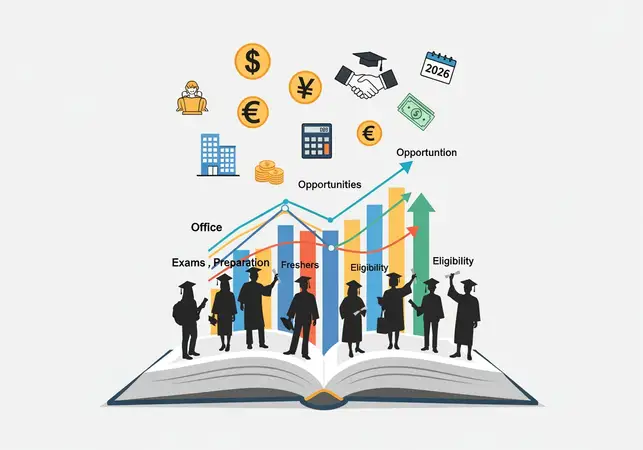
Quick Overview: Bank Jobs for Freshers 2026
- Top Exams: IBPS PO/Clerk, SBI PO/Clerk, IBPS RRB PO/Clerk
- Eligibility: Graduation in any discipline from a recognized university
- Age Limit: Typically 20-28 years for Clerks, 20-30 years for POs (with relaxations for reserved categories)
- Starting Salary (Approx.): Clerk: ₹28,000-₹35,000/month | PO: ₹52,000-₹65,000/month (including allowances)
- Application Mode: Online through official websites (ibps.in, sbi.co.in)
- Selection Process: Preliminary Exam, Main Exam, Interview (for POs)
Why Choose a Bank Job in 2026?
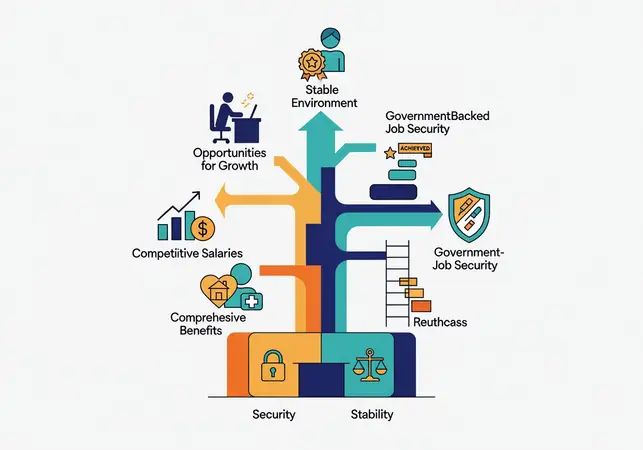
Bank jobs offer a secure career path with competitive salaries, comprehensive benefits, and opportunities for growth. The sector provides a stable work environment, government-backed job security, and a structured career progression.
- Job Security: Public sector banks offer stable employment, unlike many private sector roles.
- Attractive Salary & Benefits: Besides a good basic pay, employees receive Dearness Allowance (DA), House Rent Allowance (HRA), Medical Aid, Travel Allowance (TA), and provident fund benefits.
- Career Growth: Regular promotions and opportunities to move into specialized roles (e.g., Credit Officer, Forex Officer) are common.
- Work-Life Balance: Compared to some other government jobs, bank jobs often offer a more predictable work schedule.
- Social Respect: A bank job holds significant respect and trust within society.
Top Bank Exams for Freshers in 2026
Several major examinations recruit thousands of graduates annually. These exams are highly competitive and require focused preparation.
1. IBPS PO & Clerk
The Institute of Banking Personnel Selection (IBPS) conducts common recruitment processes for various Public Sector Banks (PSBs) and other financial institutions. The IBPS PO (Probationary Officer) and IBPS Clerk exams are the most sought-after.
- IBPS PO: Recruits for Probationary Officer/Management Trainee positions. It involves Prelims, Mains, and an Interview.
- IBPS Clerk: Recruits for Clerical cadre posts. The selection involves Prelims and Mains exams only.
- Participating Banks: Bank of Baroda, Bank of India, Canara Bank, Central Bank of India, Punjab National Bank, Union Bank of India, etc.
2. SBI PO & Clerk
State Bank of India (SBI) conducts its own independent recruitment for Probationary Officers and Clerks. SBI is India's largest public sector bank, making these positions highly prestigious.
- SBI PO: Similar to IBPS PO, it includes Prelims, Mains, and an Interview. It's often considered slightly more competitive due to SBI's brand value.
- SBI Clerk (Junior Associate): Recruits for clerical positions across various branches. Selection is based on Prelims and Mains.
3. IBPS RRB PO & Clerk
IBPS also conducts recruitment for Regional Rural Banks (RRBs). These banks operate primarily in rural areas and offer excellent opportunities for candidates preferring to work closer to their hometowns.
- IBPS RRB Officer Scale I (PO): Recruits for Assistant Manager positions. The process involves Prelims, Mains, and an Interview.
- IBPS RRB Office Assistant (Clerk): Recruits for clerical positions. Selection is based on Prelims and Mains exams.
- Language Option: Mains exam includes an option to choose between English or Hindi, and often a regional language for certain sections.
Eligibility Criteria for Bank Exams (2026)
While specific dates and notifications for 2026 are yet to be released, the fundamental eligibility criteria remain consistent with previous years. Candidates must meet these requirements to apply.
1. Nationality
- A citizen of India, or
- A subject of Nepal, or
- A subject of Bhutan, or
- A Tibetan Refugee who came over to India before 1st January 1962 with the intention of permanently settling in India, or
- A person of Indian origin who has migrated from Pakistan, Myanmar, Sri Lanka, Vietnam or East African countries of Kenya, Uganda, Tanzania, Zambia, Malawi, Zaire, Ethiopia, with the intention of permanently settling in India.
2. Educational Qualification
- For PO/Officer Scale I: A Bachelor's degree in any discipline from a recognized University or its equivalent. Candidates must have a valid mark-sheet/degree certificate showing they are graduates on the day of registration.
- For Clerk/Office Assistant: A Bachelor's degree in any discipline from a recognized University or its equivalent. Basic computer literacy is often preferred/required.
3. Age Limit (as on 1st January 2026, approximate)
Age relaxations are provided for reserved categories as per government norms.
| Post | General/EWS | OBC (Non-Creamy Layer) | SC/ST | PWD |
|---|---|---|---|---|
| Probationary Officer (PO) / Officer Scale I | 20-30 years | 20-33 years | 20-35 years | 20-40 years |
| Clerk / Office Assistant | 20-28 years | 20-31 years | 20-33 years | 20-38 years |
Bank Exam Selection Process: A Step-by-Step Guide
The selection process for most bank exams involves multiple stages designed to assess a candidate's aptitude and suitability.
Step 1: Preliminary Examination
This is the first stage, qualifying in nature. Marks from the Prelims are not counted in the final merit list. It typically consists of three sections:
- English Language: Reading Comprehension, Cloze Test, Spotting Errors, Para Jumbles.
- Reasoning Ability: Puzzles, Seating Arrangement, Syllogism, Inequality, Coding-Decoding.
- Quantitative Aptitude: Data Interpretation, Simplification/Approximation, Quadratic Equations, Number Series, Arithmetic problems.
The exam is usually 1 hour long with 100 questions and negative marking.
Step 2: Main Examination
Candidates who clear the Prelims cutoff proceed to the Mains exam. This is a more comprehensive test, and its marks are crucial for the final merit list. It includes:
- Reasoning Ability & Computer Aptitude: Advanced puzzles, logical reasoning, basic computer knowledge.
- General/Financial Awareness: Current Affairs (last 6 months), Banking Awareness, Static GK.
- English Language: Descriptive English (Essay/Letter Writing - for POs), advanced objective questions.
- Quantitative Aptitude: Advanced Data Interpretation, Arithmetic, Data Sufficiency.
The Mains exam typically lasts 2-3 hours, with a higher number of questions and marks, and negative marking.
Step 3: Interview (Only for PO/Officer Scale I)
Candidates who clear the Mains cutoff for PO positions are called for an interview. This round assesses personality, communication skills, general knowledge, and banking awareness. The interview carries significant weight in the final selection.
Step 4: Document Verification & Medical Examination
Selected candidates undergo document verification to confirm eligibility and a medical examination as per bank norms.
Bank Exam Preparation Roadmap for Freshers
A structured approach is vital for freshers. Start early, focus on conceptual clarity, and practice consistently.
1. Understand the Syllabus & Exam Pattern
- Download the official notification for the specific exam (e.g., IBPS PO 2025-26, SBI Clerk 2025-26) when released.
- Familiarize yourself with the detailed syllabus for each section (Prelims and Mains).
- Understand the marking scheme, time duration, and negative marking. For a detailed syllabus breakdown, refer to our /bank-exam-syllabus guide.
2. Build Strong Fundamentals
- Quantitative Aptitude: Master basic arithmetic (percentages, ratios, averages, profit & loss, time & work). Practice speed math techniques (Vedic Math, squares, cubes, tables). Focus on Data Interpretation (DI) sets.
- Reasoning Ability: Start with basic concepts of puzzles, seating arrangements, syllogism, and coding-decoding. Practice different types of questions daily.
- English Language: Improve reading comprehension by reading newspapers (The Hindu, Indian Express) and magazines. Focus on grammar rules, vocabulary, and sentence structure.
- General/Financial Awareness: Read daily current affairs. Follow banking news and economic updates. Use reliable sources for static GK.
- Computer Aptitude: Understand basic computer hardware, software, networking, and MS Office.
3. Practice Regularly & Take Mock Tests
- Sectional Tests: After completing a topic, take sectional tests to assess your understanding and identify weak areas.
- Full-Length Mock Tests: Start taking full-length mock tests regularly (at least 2-3 per week) as the exam approaches. This helps improve time management and builds stamina.
- Analyze Performance: Critically review your mock test results. Understand where you made mistakes and why. Focus on improving accuracy and speed in weak sections.
4. Time Management & Revision
- Create a realistic study schedule and stick to it. Allocate dedicated time for each subject.
- Regularly revise concepts, formulas, and current affairs notes.
- Practice solving questions under timed conditions to simulate the actual exam environment.
Key Dates & Application Process
Official notifications for bank exams in 2026 are typically released between June and October of the preceding year (2025) or early 2026. Keep an eye on the official websites:
- IBPS: ibps.in
- SBI: sbi.co.in/web/careers
The application process is entirely online. Candidates need to register, fill out the application form, upload required documents (photo, signature), and pay the application fee. Always refer to the official notification for precise dates and instructions.
Frequently Asked Questions (FAQs)
Q1: Can I apply for bank jobs if I am in my final year of graduation?
No, typically you must have completed your graduation and possess a valid degree certificate on or before the registration closing date mentioned in the official notification. Final year students are generally not eligible.
Q2: Is there negative marking in bank exams?
Yes, most bank exams (Prelims and Mains) have negative marking. Usually, 0.25 marks are deducted for each incorrect answer, so attempt questions carefully.
Q3: What is the difference between IBPS PO and SBI PO?
Both are Probationary Officer roles. IBPS PO recruits for multiple public sector banks, while SBI PO recruits exclusively for State Bank of India. SBI PO is often considered slightly more competitive and offers better initial perks.
Q4: How much time does it take to prepare for bank exams?
For freshers, a dedicated preparation period of 6-9 months is generally recommended to cover the entire syllabus, practice thoroughly, and achieve a good level of proficiency. Consistency is key.
Q5: Are there any computer-related questions in bank exams?
Yes, the Mains exam for most bank PO and Clerk positions includes a section on Computer Aptitude or Reasoning & Computer Aptitude, testing basic computer knowledge.
The banking sector offers a rewarding career for freshers. With consistent effort and a clear strategy, securing a bank job in 2026 is an achievable goal. Start your preparation today, focus on building strong fundamentals, and regularly assess your progress through mock tests. Success comes to those who prepare diligently.
For latest recruitment notifications and results, keep visiting TrueJobs.co.in. You can also check our section on /sarkari-result for all government exam results.
Related reads: IBPS Preparation Tips | Banking Sector Jobs | Resume Templates
FAQs
What's the minimum qualification?Graduation in any disciplineWhich exams to target?IBPS PO/Clerk, SBI PO/ClerkRelated Resources
- Latest Sarkari Naukri
- All Bank Jobs
- IBPS PO Preparation Guide
- SBI Clerk Syllabus
Checks to complete before you apply
Starting your preparation early for 2026 bank exams is the key to success. Stay updated with official notifications and follow a disciplined study plan. A bank job offers a rewarding and stable career path for dedicated freshers.
Related Government Job Resources
Continue with active job hubs and related government job pages on TrueJobs.
Tools for this recruitment topic
Use only the tools relevant to the dates, eligibility or documents discussed above.
TrueJobs Editorial Team
TrueJobs editorial desk
This article is prepared from the sources referenced in the guide and reviewed for clarity, links and dated information. Read our editorial and corrections policy.
Continue This Topic
Follow the closest earlier and newer coverage so older archive posts keep real contextual crawl paths.
सरकारी रिजल्ट 2026: एडमिट कार्ड, आंसर की, परिणाम और कट ऑफ सुरक्षित रूप से कैसे चेक करें
सरकारी रिजल्ट 2026 से जुड़ी जानकारी जैसे एडमिट कार्ड, आंसर की, और कट ऑफ सुरक्षित रूप से कैसे चेक करें? जानें सही तरीका और फर्जी वेबसाइटों से बचें।
10वीं पास सरकारी नौकरी 2026: बेस्ट मौके, सैलरी और योग्यता
अगर आप 10वीं पास हैं और सरकारी नौकरी की तलाश में हैं, तो 2026 में आपके लिए कई शानदार मौके आने वाले हैं। रेलवे, SSC, पुलिस और डाक विभाग में हजारों पदों पर भर्ती होगी।
Read Next

IBPS RRB क्लर्क 2026: योग्यता, सैलरी, और परीक्षा पैटर्न की पूरी जानकारी

SBI Clerk 2026: Eligibility, Salary, Exam Pattern & Smart Preparation Plan
सरकारी नौकरी कैलेंडर 2026: SSC, UPSC, Banking, Railway, Defence - महीनेवार गाइड

Defence Jobs After 12th in 2026: Army, Navy, Air Force Agniveer Options
Explore Topics
Perfect Your Resume
Use our AI-powered Resume Builder to create ATS-optimized resumes.
AI Resume Builder