
Recruitment guide
B.Ed Entrance Form 2026: Dates & Application Guide — Explained
A comprehensive guide on the B.Ed Entrance Application Form 2026, covering the expected registration process, eligibility criteria, and a step-by-step guide on how to apply. Official notification is awaited.

The Bachelor of Education (B.Ed) is a crucial gateway for aspiring teachers seeking to build a career in the Indian schooling system. The B.Ed entrance exam is the first and most important step in this journey, conducted by various universities and state-level bodies. For the 2026 academic session, thousands of candidates will be looking to secure a seat in a reputable B.Ed college. This comprehensive guide provides an in-depth look at the expected application process for the B.Ed Entrance Exam 2026, detailing the registration procedure, important steps, and essential preparation tips. As of now, the official notification for the 2026 cycle is awaited from the respective conducting authorities.
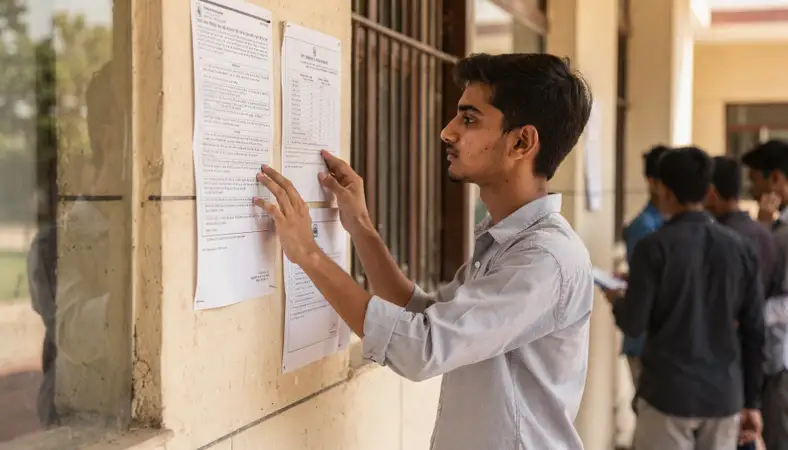
Understanding the B.Ed Entrance Exam 2026
The B.Ed entrance exam is a centralized test that determines eligibility for admission into two-year B.Ed programs across numerous government and private teacher training institutes in India. Unlike a single national-level exam, it is conducted by multiple entities. Key conducting bodies include state universities like Delhi University (DU), Banaras Hindu University (BHU), and Guru Gobind Singh Indraprastha University (GIPSU), as well as dedicated state education boards like the Madhya Pradesh Professional Examination Board (MPPEB) or the Uttar Pradesh Basic Education Board (UPBEB). The specific exam you need to apply for depends entirely on the university or state you wish to study in. The exam typically assesses a candidate's teaching aptitude, general awareness, reasoning abilities, and subject knowledge.
Expected Important Dates for B.Ed Entrance 2026
While the official notification for the 2026 session is yet to be released, candidates can get a general idea of the annual timeline based on previous year trends. It is critical to understand that these are not official dates but a projected schedule to help you plan your preparation. The actual dates will be confirmed only upon the release of the official notification by the respective exam bodies.
| Event | Expected Timeline (Tentative) |
|---|---|
| Release of Official Notification | To be announced |
| Start of Online Registration & Application | To be announced |
| Last Date to Submit Application Form | To be announced |
| Application Form Correction Window | To be announced |
| Release of Admit Card | To be announced |
| B.Ed Entrance Exam Date 2026 | To be announced |
| Declaration of Result | To be announced |
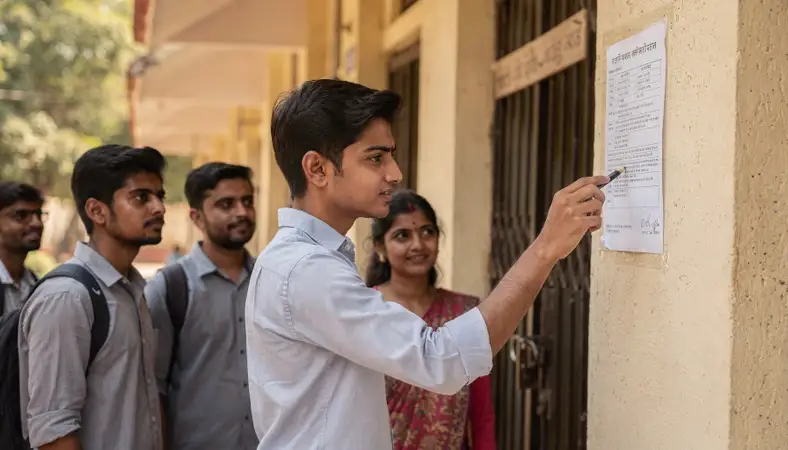
Note: Candidates must regularly check the official website of the university or state board they are interested in for the exact and official schedule. Do not rely on third-party sources for deadline information.
Eligibility Criteria for B.Ed Entrance 2026
Before initiating the application process, it is paramount to ensure you meet the eligibility criteria set by the conducting body. While specific requirements can vary slightly between universities, the general criteria are as follows:
- Nationality: The candidate must be a citizen of India.
- Educational Qualification: The candidate must have passed a Bachelor's degree (BA, B.Sc, B.Com, etc.) or a Master's degree from a recognized university. The minimum aggregate marks required usually range from 50% to 55% for general category candidates, with relaxation provided for reserved categories (SC/ST/OBC/PwD) as per government norms.
- Age Limit: As per previous year trends, the lower age limit is typically 21 years. There is often no upper age limit for the B.Ed entrance exam, but this can vary by state rules. Candidates must verify this from the official notification.
- Subject Requirements: Some universities may require the candidate to have studied specific subjects at the graduation level to be eligible for particular specializations (e.g., Science stream for teaching Science).
Step-by-Step Guide: How to Apply for B.Ed Entrance 2026
The application process for most B.Ed entrance exams is conducted online. The following is a generalized step-by-step guide based on the common procedure observed in previous cycles. The exact steps may differ for different universities.
Step 1: Registration
Visit the official website of the exam conducting authority (e.g., du.ac.in for Delhi University). Look for the link to 'B.Ed Entrance Application 2026' or 'Admissions 2026'. Click on the 'New Registration' or 'Apply Online' button. You will be required to provide basic details such as your name, date of birth, email ID, and mobile number to generate a registration number and password. These login credentials are crucial for all future steps, so note them down carefully.
Step 2: Filling the Application Form
Log in using your registration number and password. Carefully fill in the detailed application form. The information required usually includes:
- Personal Details (name, parent's name, category, etc.)
- Educational Qualifications (marks, year of passing, board/university)
- Communication Address
- Choice of Exam Center (if applicable)
Double-check every entry for accuracy before proceeding. Any mistake can lead to rejection of the application.
Step 3: Uploading Documents
You will be prompted to upload scanned copies of documents as per the specified format and size. Commonly required documents include:
- Recent passport-sized photograph
- Signature
- Category certificate (if applicable)
- PwD certificate (if applicable)
Ensure the scans are clear and meet the required dimensions (e.g., photograph: 4.5cm x 3.5cm, signature: 4cm x 3cm) and file size (usually between 10 KB to 200 KB).
Step 4: Application Fee Payment
The final step is to pay the non-refundable application fee. The fee amount varies for different categories (General, OBC, SC/ST/PwD). As per previous trends, the fee for general category candidates can range from INR 500 to INR 1500, with a concession for reserved categories. Payment can be made online using various methods:
- Credit Card
- Debit Card
- Net Banking
- UPI
After successful payment, you will receive a confirmation message on your registered email and mobile number.
Step 5: Print the Application Form
After the fee payment is confirmed, it is highly recommended to download and print a copy of the completed application form and the payment receipt for your future reference and record. This is crucial for the /admit-cardadmit card download process and future correspondence.
Documents Required for Application
Having the following documents and information ready before you start filling out the form will make the process smooth and error-free:
- Class 10th Marksheet and Certificate (for date of birth proof)
- Class 12th Marksheet and Certificate
- Graduation Marksheets and Degree
- Post-Graduation Marksheets and Degree (if applicable)
- Category Certificate (SC/ST/OBC/EWS), if applicable
- Person with Disability (PwD) Certificate, if applicable
- Domicile Certificate, if required by the state board
- A valid photo ID proof (Aadhaar Card, Voter ID, Passport, etc.)
- Scanned copies of photograph and signature as per specifications
- Active personal email ID and mobile number
Application Fee Details
The application fee is an essential part of the process. The table below provides a tentative overview of the fee structure based on previous years. The actual fee for the 2026 cycle will be confirmed in the official notification.
| Category | Expected Application Fee (Tentative) |
|---|---|
| General / Unreserved / OBC | INR 500 - INR 1500 |
| SC / ST / PwD | INR 250 - INR 750 |
What to Do After Applying?
Submitting the application is just the beginning. Here’s what you should do next:
- Save Your Credentials: Safely store your registration number, password, and application number.
- Check for Corrections: Most authorities open a brief correction window after the application deadline closes. Keep an eye on the official website to correct any inadvertent errors in your form.
- Download Admit Card: A few weeks before the exam, the admit card will be released on the official website. You will need your login credentials to download it. The admit card is a mandatory document to carry to the exam hall. Check our guide on /admit-cardhow to download your admit card for more details.
- Intensify Preparation: Use the time between application and the exam to focus on rigorous revision and practicing mock tests.
- Check Results: After the exam, the results will be declared online. You can check your score and qualifying status using your roll number or application number. Keep track of the /sarkari-resultSarkari Result page on our website for updates.
Checks to complete before you apply
The path to becoming a teacher through the B.Ed program starts with a successful application for the entrance exam. While the official dates and details for the B.Ed Entrance Application Form 2026 are still awaited, proactive candidates can use this time to gather all necessary documents, understand the process, and begin their exam preparation in earnest. The key to a hassle-free application is attention to detail, adherence to deadlines, and relying solely on information from the official websites of the respective universities or state boards. Stay vigilant, prepare diligently, and take this first step confidently towards a rewarding career in education.
Frequently Asked Questions (FAQs)
Q1: When will the B.Ed Entrance 2026 application form be released?
The official notification and application form release date for the B.Ed Entrance Exam 2026 have not been announced yet. Candidates are advised to regularly monitor the official websites of the universities or state education boards they are targeting for the most accurate and timely information.
Q2: Can I apply for multiple B.Ed entrance exams?
Yes, you can apply for multiple B.Ed entrance exams conducted by different universities or states, provided you meet their respective eligibility criteria. You will need to complete the separate application process and pay the application fee for each exam.
Q3: What is the application fee for the general category?
As per previous year trends, the application fee for the general category typically ranges from INR 500 to INR 1500, depending on the conducting university or board. The exact fee for the 2026 cycle will be specified in the official notification.
Q4: Is there any age limit for applying to the B.Ed entrance exam?
As per previous cycles, the lower age limit is usually 21 years. However, many states and universities do not have an upper age limit. It is crucial to check the specific age criteria mentioned in the official notification of the exam you are applying for.
Q5: What if I make a mistake in my application form after submission?
Most conducting authorities provide a limited-time correction window after the application submission deadline. During this period, you can log in to the application portal and correct certain details in your form. No changes are usually allowed after this correction window closes, so it is important to review your form carefully before the final submission.
Related Resources
Related Government Job Resources
Continue with active job hubs and related government job pages on TrueJobs.
Tools for this recruitment topic
Use only the tools relevant to the dates, eligibility or documents discussed above.
TrueJobs Editorial Team
TrueJobs editorial desk
This article is prepared from the sources referenced in the guide and reviewed for clarity, links and dated information. Read our editorial and corrections policy.
Continue This Topic
Follow the closest earlier and newer coverage so older archive posts keep real contextual crawl paths.
B.Ed Entrance Exam Date 2026: Schedule, Admit Card & City Intimation
Your complete guide to the B.Ed Entrance Exam 2026. Learn the tentative schedule, how to download your city intimation slip and admit card, and essential preparation strategies for success.
CTET Cut Off 2026: Expected Trends, Counselling & Seat Allotment Process
A complete guide to understanding the CTET 2026 cut off, the counselling registration process, and how seat allotment works for central government teaching jobs.
Read Next

B.Ed Entrance Answer Key 2026: PDF Download & Objection Window Guide

CTET Cut Off 2026: Expected Trends, Counselling & Seat Allotment Process

B.Ed Entrance Exam Date 2026: Schedule, Admit Card & City Intimation

CTET Application Form 2026: Registration Date, Fees & How to Apply
Explore Topics
Perfect Your Resume
Use our AI-powered Resume Builder to create ATS-optimized resumes.
AI Resume Builder